Signs Your AC Compressor Needs Repair
Hard starts, trips and no cooling can involve the compressor—or related parts. Learn key warning signs and why careful diagnosis should come first.
The compressor is central to the refrigeration cycle, but several other faults can imitate compressor trouble. Hard starts, breaker trips, warm air, unusual noise, and short cycling deserve prompt diagnosis; they do not automatically prove that the compressor must be replaced. In Saudi heat, continuing to force a struggling outdoor unit can increase stress and turn a supporting-component fault into a larger failure.
What the Compressor Does
The compressor circulates refrigerant and creates the pressure difference that allows heat to move from indoors to outdoors. It operates with the condenser fan, indoor blower, metering device, controls, capacitors or drive electronics, electrical supply, coils, and refrigerant charge. A problem anywhere in that chain can change compressor sound, temperature, current, or runtime.
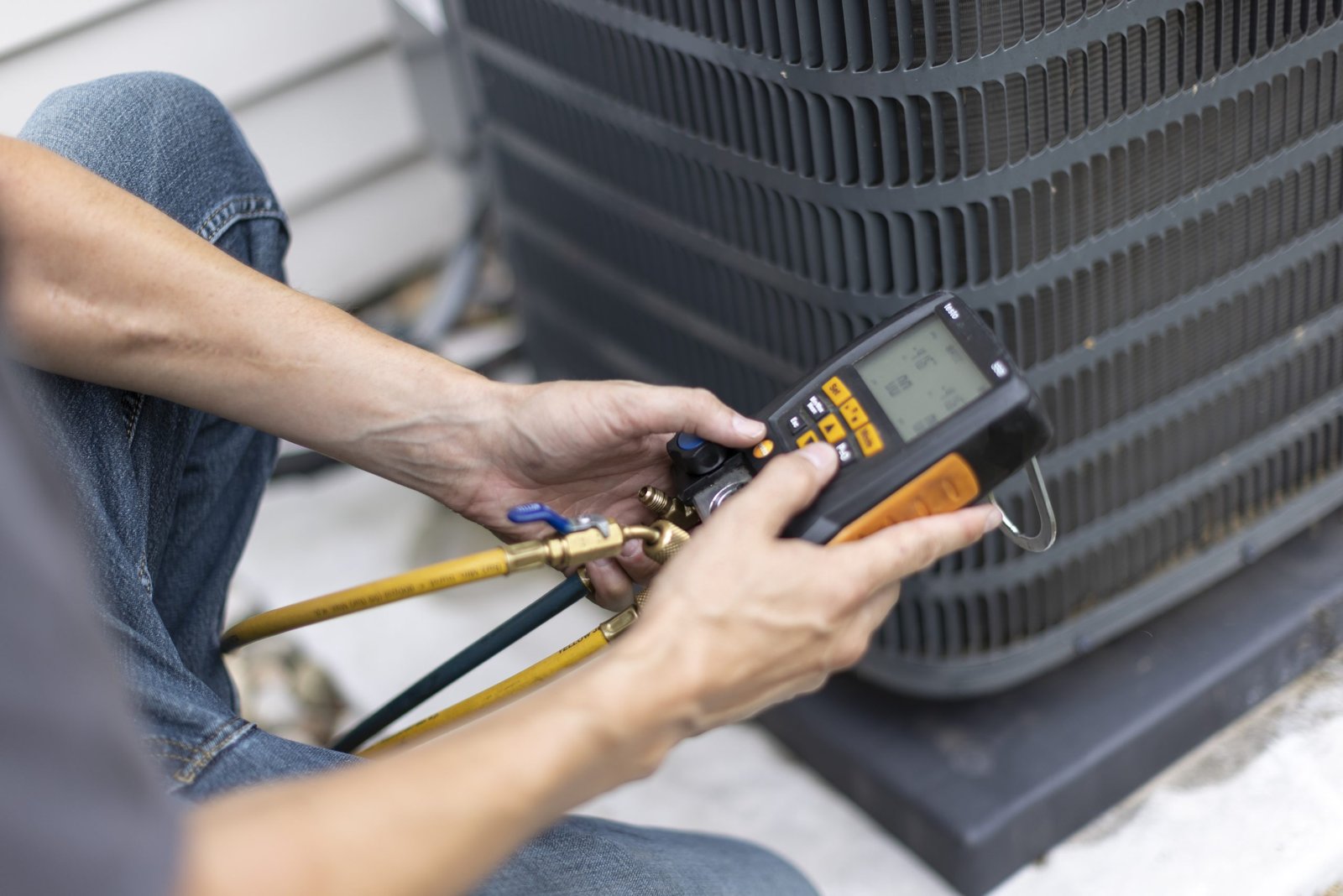
Because symptoms overlap, a qualified technician should test the complete system. A diagnosis based only on listening from outside or reading one pressure can be incomplete. The aim is to identify whether the compressor itself is mechanically or electrically damaged, being commanded incorrectly, or being pushed outside safe conditions.
Warning Signs That Need Investigation
- The outdoor unit hums or clicks but struggles to start
- A breaker or equipment protection trips repeatedly
- Cooling is weak while fans appear to run
- The system starts and stops in unusually short cycles
- New grinding, rattling, buzzing, or harsh startup sounds appear
- The compressor becomes unusually hot or shuts down on protection
- Electrical tests show abnormal winding or current conditions
- Oil staining or refrigerant leakage appears near compressor connections
Hard Starting and Repeated Start Attempts
A hard-starting system may produce a loud hum, dim lights briefly, click off, then retry. Compressor wear is one possibility, but a weak capacitor, damaged contactor, loose terminal, low supply voltage, incorrect control signal, or poor connection can produce similar behavior. Some modern variable-speed units use inverter electronics rather than conventional start components, requiring different diagnostic procedures.
Do not keep cycling power in the hope that it will eventually start. Repeated locked or difficult starts generate heat and electrical stress. Turn the system off and arrange AC compressor diagnosis, especially when the issue repeats during peak afternoon heat.
Breaker Trips and Electrical Protection
A breaker is a safety device, not an operating switch. Trips can result from a shorted wire, fan motor fault, failing capacitor, compressor winding problem, grounded component, damaged contactor, incorrect breaker, or supply issue. Resetting repeatedly without finding the cause risks equipment damage and electrical hazards.
Tell the technician whether the trip occurs instantly, after the compressor tries to start, or after several minutes of running. Timing narrows the investigation. Note whether the indoor and outdoor fans were operating and whether any burning odor or unusual sound occurred. For urgent occupied-space failures, review emergency AC repair.
Warm Air Does Not Always Mean Compressor Failure
If the system runs but does not cool, check the thermostat mode and accessible filter first. Weak cooling can come from dirty coils, blocked airflow, a failed condenser fan, refrigerant leakage, a metering restriction, sensor errors, or duct problems. A compressor may run yet pump poorly, but that conclusion requires temperature, pressure, current, and system-condition evidence.
In dusty Saudi conditions, a clogged condenser can drive operating pressure and temperature higher. A loaded indoor filter can reduce heat transfer and cause icing. Addressing these external conditions can protect the compressor. See the broader AC not cooling guide for related causes.
New or Harsh Outdoor-Unit Noise
Grinding, knocking, or metallic rattling from the compressor area can indicate internal wear, mounting issues, piping contact, or another loose component. Buzzing may be electrical, while rattling can come from a fan guard or panel. Sound location and timing matter, and technicians should isolate simple sources before condemning a major component.
Record a short video from a safe distance, noting whether the sound occurs at startup, continuously, or during shutdown. Do not remove panels around live equipment. Specialized help is available through AC making noise repair.
Short Cycling and Thermal Shutdown
A unit that starts, runs briefly, and stops may be responding to thermostat placement, an oversized system, frozen coil, high-pressure protection, low-pressure protection, overheating, control-board faults, or compressor internal protection. Extreme outdoor heat and poor condenser airflow can make thermal trips more likely.
Check whether the outdoor coil is visibly blocked and whether required clearances are obstructed, but avoid spraying or opening energized equipment. A technician should inspect airflow, fans, coils, charge condition, sensors, protections, and electrical readings. The stop reason stored in controls can be valuable on advanced systems.
Refrigerant and Oil Clues
Oil staining around joints can suggest a refrigerant leak because compressor oil circulates in small amounts with refrigerant. Hissing, ice, long runtimes, and weak cooling may accompany undercharge, although none proves the leak location. Refrigerant is not consumed during normal operation.
Adding gas without investigating leakage may offer temporary cooling while the compressor remains poorly cooled or lubricated. Proper work should follow a leak assessment, repair decision, evacuation where required, and correct charge method. Learn more about AC gas refill and leak checks.
What a Technician Should Test
- Supply voltage, connections, contactor, protection, and control commands
- Capacitor condition or inverter-drive fault information, as applicable
- Compressor winding resistance and insulation integrity when appropriate
- Starting and running current compared with equipment data
- Indoor and outdoor airflow, coil cleanliness, and fan operation
- Refrigerant temperatures and pressures interpreted with actual load
- Evidence of restriction, leakage, floodback, or overheating
- Mountings, piping contact, sound, and operating sequence
Repair, Supporting-Part Replacement, or Compressor Replacement?
Some symptoms are resolved by replacing a failed capacitor, contactor, fan, sensor, wiring section, or control part. Refrigerant leaks or dirty coils may require separate correction. A sealed compressor generally is not opened for internal field repair; “compressor repair” may mean correcting its electrical and system causes or replacing the compressor when internal failure is confirmed.
The decision depends on fault evidence, equipment age and condition, refrigerant type, parts availability, system cleanliness, warranty, access, and the cost of restoring reliable operation. If replacement is considered, the cause of the original failure must be addressed so the new component is not exposed to the same stress.
How to Reduce Compressor Stress
Keep filters and coils clean, preserve outdoor clearances, correct refrigerant leaks, maintain fans and controls, and schedule service before peak summer. Use sensible setpoints and avoid repeated manual power cycling.
If your AC is hard starting, tripping, noisy, or no longer cooling, contact Namaa HVAC with the system type, city, symptom timing, and any fault codes for a focused assessment.
Frequently Asked Questions
What are common compressor-related warning signs?
Hard starting, repeated attempts to start, no cooling with outdoor issues, unusual grinding or heavy vibration, and breaker trips during outdoor startup can appear.
Does a noisy outdoor unit always mean a bad compressor?
No. Fans, loose panels, capacitors and mounting issues can create noise. Diagnosis should separate compressor faults from supporting components.
Can I keep running the system if it hard-starts?
Repeated hard starts can stress electrical components. Arrange inspection rather than forcing continuous operation through the fault.
Why do technicians check capacitors first?
Weak capacitors often mimic compressor failure symptoms. Testing supporting parts prevents unnecessary compressor conclusions.
Is compressor work the same as a gas refill?
No. Refrigerant service and compressor diagnosis are related but different scopes. Low gas alone does not automatically mean compressor failure.
Need AC Service? Get in Touch Today
Tell us about your AC issue and we will get back to you promptly.
- Call +966 12 345 67890
- Email info@namaahvac.com
- Hours Saturday – Thursday: 8:00 AM – 10:00 PM | Friday: 2:00 PM – 10:00 PM
- Service Areas Riyadh, Jeddah, Dammam, Khobar, Mecca, Medina & major cities across KSA