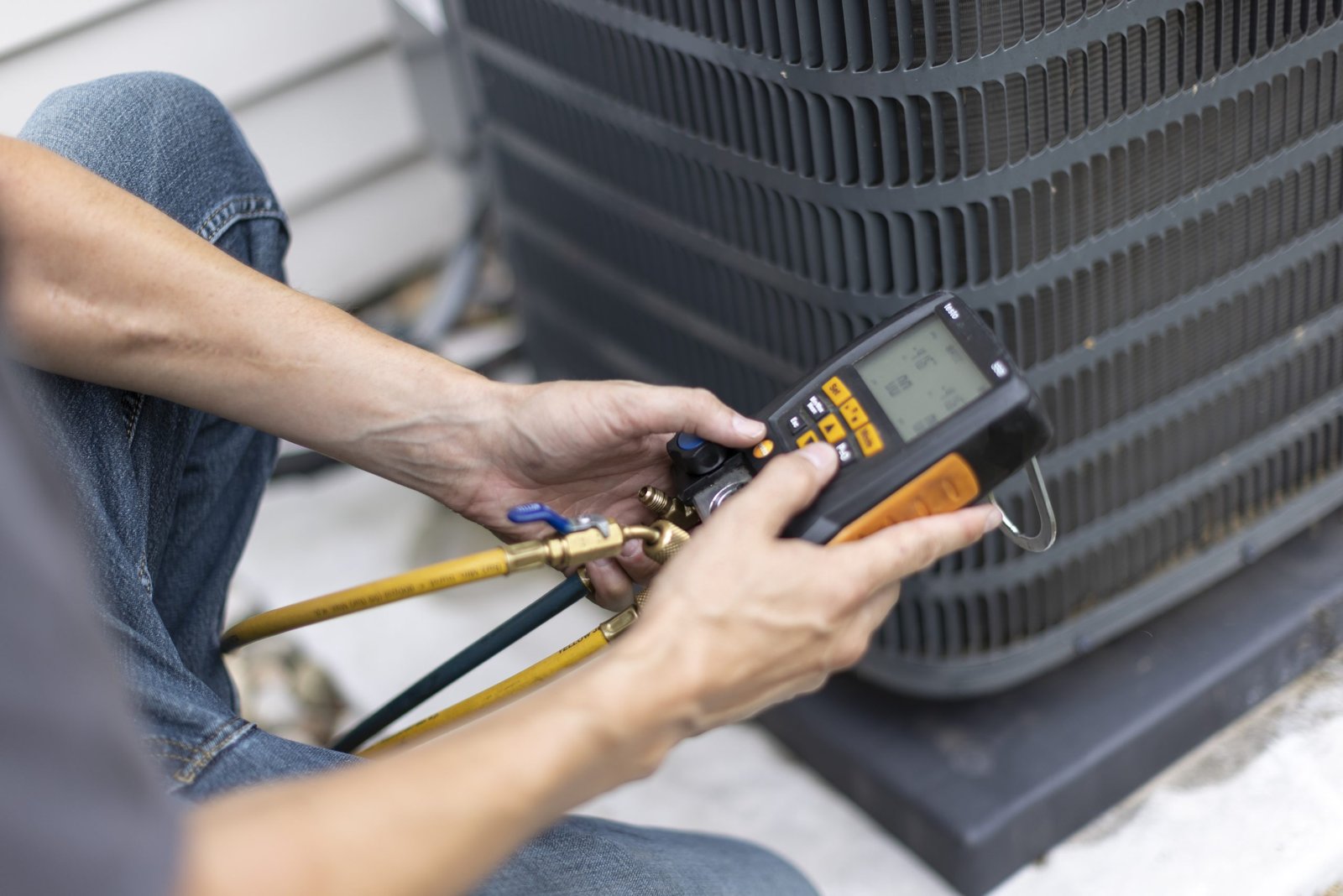
Central AC Maintenance Guide
What central AC maintenance typically includes for reliable cooling in Saudi homes and buildings—from filters and drains to outdoor and airflow checks.
Central air conditioning has to move, cool, and distribute a large volume of air across a property. In Saudi Arabia, high outdoor temperatures, dust, long runtimes, and coastal humidity expose weak points quickly. Central AC maintenance is therefore more than washing a filter: it is a structured inspection of airflow, refrigeration, electrical components, controls, drainage, and the condition of the equipment as a complete system.
What Central AC Maintenance Should Include
A useful visit begins with operating observations. The technician should ask about warm rooms, unusual sounds, odors, water marks, repeated trips, and changes in running time. Measurements taken before cleaning or adjustment preserve clues that might otherwise disappear. The work should then follow the equipment layout and manufacturer guidance.
- Inspect or replace filters with the correct approved type
- Assess return and supply airflow, grilles, and accessible duct connections
- Examine evaporator and condenser coils for dust, blockage, and fin damage
- Check blower and outdoor fan operation
- Inspect drain pan, trap, line, and condensate disposal route
- Test electrical terminals, contactors, capacitors, protection devices, and current draw
- Review thermostat, sensors, zoning controls, and operating sequence
- Evaluate refrigerant performance when symptoms or readings justify it
- Document defects, measurements, and recommended priorities
Airflow Is the Foundation of Reliability
Central systems depend on balanced airflow. A clogged filter, dirty coil, slipping blower, closed damper, crushed flexible duct, or blocked return can reduce capacity even when the refrigeration circuit is healthy. In a villa or office, one uncomfortable room may be a distribution issue rather than a failed central unit. That distinction prevents unnecessary parts replacement.
Filters should be inspected according to dust exposure and operating hours. In Saudi summer, monthly calendar checks may not be enough for some sites; inspection after dust events is sensible. Replacement media must match the equipment's airflow requirements. A high-density filter selected without considering pressure drop can create a new restriction. For deeper hygiene work, see AC cleaning.
Indoor and Outdoor Coil Care
The evaporator coil absorbs indoor heat, while the condenser rejects it outside. Dust on either surface acts as insulation. Outdoor coils in exposed yards and rooftops can load rapidly, especially near roads or construction. Cleaning must use an appropriate method: excessive pressure can flatten fins, while careless chemicals can damage materials or nearby finishes.
Indoor coil inspection can reveal bypass dust, biological buildup, corrosion, and evidence of icing. If a coil freezes, the root cause may be restricted airflow, a fan fault, control trouble, or low refrigerant. Simply melting the ice does not correct the cause. Ongoing weak cooling should be assessed through central AC cooling diagnosis.
Drainage Matters, Especially Near the Coast
Cooling removes moisture from air. In humid cities, the drain system may carry substantial condensate for long periods. Sludge, an incorrect trap, poor slope, damaged insulation, or a cracked pan can lead to ceiling stains and equipment shutdown. Maintenance should confirm that water flows to the intended location and that access points are closed after service.
Technicians should also look for sweating on uninsulated pipes or duct surfaces, because not every water mark comes from a blocked drain. If water is already escaping into occupied areas, use AC leaking water service promptly to limit property damage.
Electrical and Mechanical Checks
Long summer runtimes place repeated stress on motors, capacitors, contactors, terminals, and compressors. Inspection can identify discoloration, loose connections, abnormal noise, or readings outside equipment expectations. Power must be isolated appropriately before internal electrical work. Repeated breaker trips should never be treated by continually resetting the breaker.
Fans and bearings
Indoor and outdoor fans should start cleanly, run smoothly, and move the expected air. Vibration may result from dirt buildup, looseness, worn bearings, or a damaged wheel. A noise complaint is valuable diagnostic evidence; recordings and timing notes can help before a visit for AC noise repair.
Compressor and supporting components
Hard starting, short cycling, or overheating can involve the compressor, but capacitors, contactors, supply voltage, airflow, controls, and refrigerant conditions must also be checked. Sound maintenance avoids declaring a compressor failed solely from one symptom. Where testing points that way, use qualified compressor repair.
Refrigerant Is Not Routine Top-Up Material
A sealed system should not need gas added at every maintenance visit. Pressures alone can also mislead because they vary with load and conditions. A technician should consider temperatures, airflow, equipment data, and operating state. If undercharge is suspected, leak investigation and repair planning matter more than repeated topping up. Read about proper AC gas refill assessment.
Controls, Zoning, and Thermostat Review
Central comfort depends on sensors and control logic. A thermostat exposed to direct sun, placed near a supply outlet, or affected by an internal heat source can misread the representative room temperature. Zoned systems add dampers, actuators, and control boards that need sequence checks. The technician should confirm that calls for cooling reach the correct equipment and that stages engage as designed.
When and How Often to Schedule Service
Frequency depends on system type, use, dust exposure, criticality, and manufacturer requirements. A residence may combine owner filter checks with planned professional visits before peak heat. Offices, shops, clinics, and server-supported facilities often need more frequent documented inspections. An annual AC maintenance plan should specify tasks and visit timing rather than rely on a vague promise to “service” the unit.
What a Good Maintenance Report Looks Like
The report should identify the equipment, work completed, measured observations, defects found, and urgency of each recommendation. Photos can clarify inaccessible coil condition, corrosion, drain issues, or damaged wiring. Costs should follow diagnosis and consider access, parts, system size, and repair scope; fixed assumptions without inspection are unreliable.
Keep reports together so recurring failures become visible. Rising complaints in one zone, repeated capacitor replacement, or recurring drain blockage may point to an underlying design, access, or environmental issue. This history helps the owner choose between repair, modification, and eventual central AC replacement or installation.
Owner Checks Between Professional Visits
Keep returns clear, inspect accessible filters, note thermostat behavior, and look for new water marks or sounds. Avoid opening electrical panels or applying chemicals. After a major dust storm, inspect outdoor clearances and filters without touching live equipment. In Riyadh, local support is available through Riyadh AC maintenance.
To arrange a central system inspection built around reliability and real operating conditions, contact Namaa HVAC with the property type, city, and symptoms you have noticed.
Frequently Asked Questions
What does central AC maintenance usually cover?
Filters and returns, coil and drain attention, outdoor equipment condition, airflow distribution checks and performance notes under cooling demand.
How is central maintenance different from split care?
Central systems add distribution complexity—returns, ducts or shared airflow paths—so professional inspection carries more weight between owner filter habits.
How often should central systems be serviced?
Many properties schedule professional attention before peak summer and adjust based on dust, runtime and commercial occupancy needs.
Why do some rooms feel weaker after maintenance?
Balancing, dampers, duct issues or unequal loads can remain. Report room-by-room symptoms so airflow can be reviewed.
When is central repair needed instead of maintenance?
If cooling fails, unusual noise appears, water leaks, or breakers trip, move from routine care to diagnosis and repair.
Need AC Service? Get in Touch Today
Tell us about your AC issue and we will get back to you promptly.
- Call +966 12 345 67890
- Email info@namaahvac.com
- Hours Saturday – Thursday: 8:00 AM – 10:00 PM | Friday: 2:00 PM – 10:00 PM
- Service Areas Riyadh, Jeddah, Dammam, Khobar, Mecca, Medina & major cities across KSA