AC Maintenance Checklist for Commercial Buildings
A practical AC maintenance checklist for facility managers facing Saudi heat, dust, long operating hours and multi-unit commercial building portfolios.
Commercial AC maintenance works best as a managed program rather than a sequence of emergency calls. Facility managers in Saudi Arabia must plan for extreme summer heat, airborne dust, long operating hours, varied tenant loads, and coastal humidity where applicable. A practical checklist connects physical tasks with records, priorities, safe access, and follow-up so that small defects are addressed before comfort or business operations are disrupted.
Build the Asset Register First
List every outdoor unit, air handler, fan coil, packaged unit, exhaust fan, pump, control panel, thermostat, and major ventilation component. Assign a clear asset ID that matches labels in the field. Record location, system served, model, serial number, capacity, filter type, criticality, warranty details, and safe access requirements.
Update the register after layout or equipment changes, and link reports and fault history to each asset ID. Coordinate larger portfolios through commercial HVAC service.
Routine Facility Checks
- Review alarms, complaints, and unusual energy or runtime patterns
- Inspect accessible filters and record condition by asset
- Confirm return and supply openings are not blocked
- Look for water stains, active leaks, damaged insulation, and corrosion
- Listen for new fan, bearing, vibration, or compressor sounds
- Keep outdoor-unit airflow and service clearances free of storage
- Check representative room temperatures against schedules
- Confirm doors, windows, and loading areas are not defeating control
- Escalate repeated trips, burning odors, or severe noise immediately
Adjust intervals to site conditions. Entrances near roads or construction need closer filter checks. After a dust storm, inspect exposed filters and condensers without waiting for the next visit.
Filter and Airflow Maintenance
Technicians should inspect filter fit, condition, bypass gaps, and pressure effects—not only replace media. Use the specified filter size and performance. Installing denser media without checking fan capability can reduce airflow. Record replacement date and condition so the schedule can be adjusted based on evidence.
Inspect belts where fitted, pulleys, blower wheels, motors, dampers, grilles, and accessible duct sections. Compare airflow complaints by zone. One warm office may indicate a closed damper or fit-out change, while several warm zones may point to shared equipment. Arrange AC cleaning when coils or blowers are contaminated beyond routine filter care.
Coils and Heat-Rejection Equipment
Evaporator and condenser coils should be assessed for dust, grease, corrosion, blocked fins, and physical damage. Outdoor heat rejection is especially important during Saudi summer. Condensers surrounded by stored goods, decorative screens, or recirculating discharge air can run under severe stress.
Use cleaning methods compatible with coil materials and site drainage. High pressure can flatten fins, and chemical runoff may damage roofs or landscaping. After cleaning, verify that fan operation, panels, and clearances are correct.
Condensate and Humidity Checklist
Inspect drain pans, traps, cleanouts, lines, pumps, float switches, pipe insulation, and discharge points. Test flow rather than assuming a visually clear pipe works. Humid coastal locations can produce large volumes of condensate, while concealed leaks can damage ceilings and tenant finishes before they are noticed.
- Remove sludge using an appropriate controlled method
- Confirm drain slope and trap configuration
- Test overflow protection and condensate pumps
- Repair damaged insulation that causes surface sweating
- Investigate recurring blockage instead of repeatedly clearing symptoms
Active overflow in an occupied area should be prioritized through AC water-leak repair.
Electrical and Mechanical Inspection
Qualified personnel should inspect terminals, isolators, contactors, capacitors, relays, drives, wiring condition, motor operation, protective devices, and equipment panels. Compare electrical readings with equipment information and previous records. Heat discoloration, looseness, or abnormal current deserves correction and root-cause review.
Examine bearings, belts, mounts, guards, fan blades, and vibration isolators. A small vibration can loosen connections and damage piping over time. Repeated breaker trips must never be managed by resets alone. Sudden severe faults in critical areas may require emergency AC repair.
Refrigeration System Checks
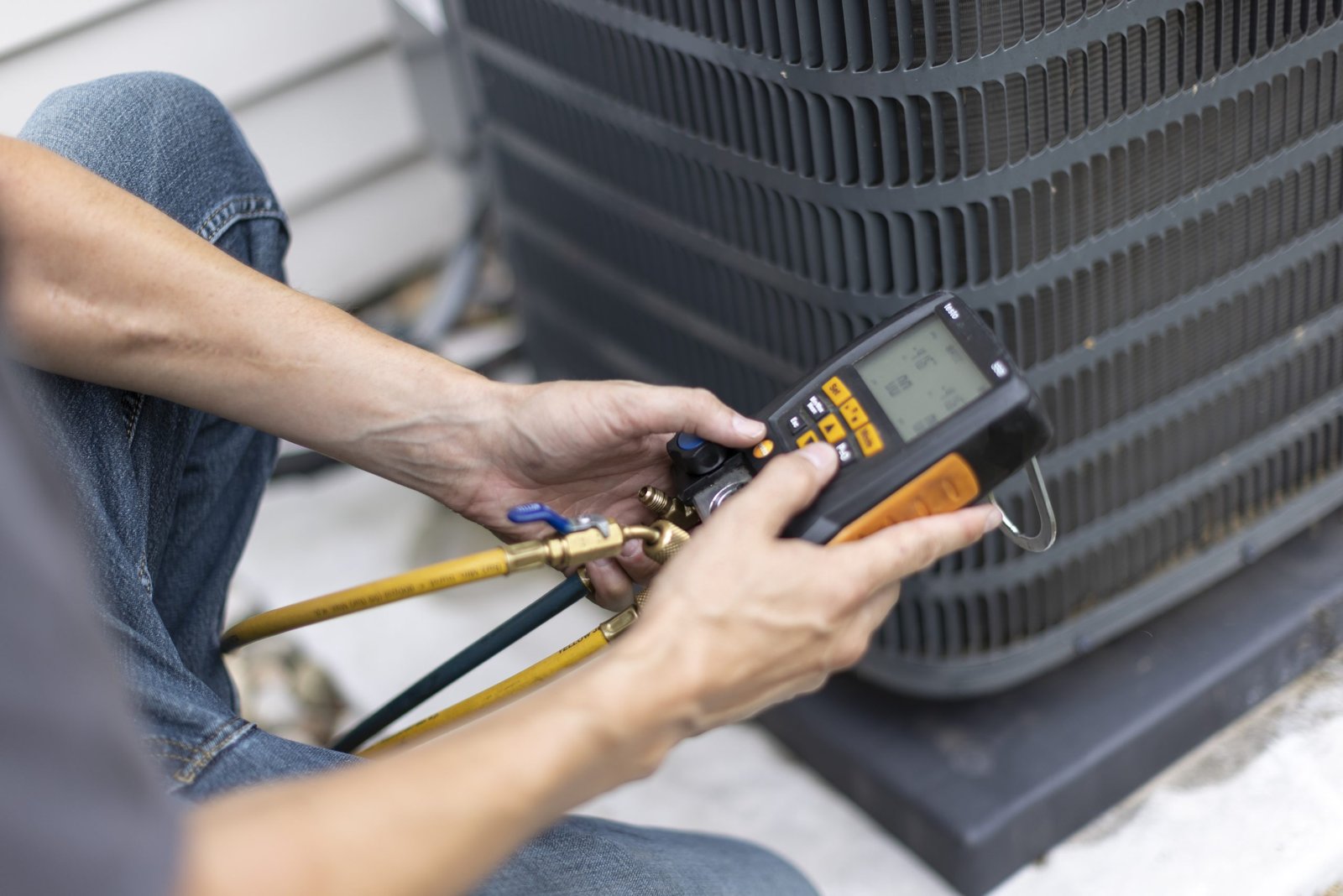
Refrigerant measurements should be taken when operating symptoms, planned procedures, or manufacturer guidance justify them. Interpret pressure with temperatures, airflow, load, and outdoor conditions. Refrigerant is not routinely consumed, so low charge calls for leak investigation rather than automatic topping up.
Inspect accessible pipe insulation, joints, supports, service caps, and signs of oil. Monitor compressors for hard starts, abnormal current, heat, noise, and repeated protection events. Supporting components and operating conditions must be tested before concluding that a compressor has failed; use compressor repair diagnosis when indicated.
Controls, Sensors, and Scheduling
Review thermostat locations, calibration, occupied schedules, setpoints, after-hours overrides, damper commands, and building-management alarms. Confirm sensors have clear names and represent their zones. A sensor near a sunny window or supply grille can drive the wrong response.
Trend data can reveal equipment running continuously, zones cooling after hours, simultaneous conflicting commands, or gradual loss of performance. Alarm lists should be prioritized so important faults are not buried. Back up control settings where appropriate and document approved changes.
Ventilation and Indoor Air Quality
Inspect outdoor-air intakes, screens, filters, dampers, exhaust fans, and accessible heat-recovery equipment. Verify that intakes are not obstructed or drawing contamination from exhausts. Tenant renovations can upset pressure relationships and airflow, so rebalance after material layout changes.
Comfort cooling and ventilation are connected but not identical. A room can be cold yet stuffy if outdoor air is inadequate. Kitchens, toilets, parking interfaces, and high-occupancy meeting rooms require particular attention. Include these systems in the maintenance scope instead of limiting it to compressors.
Seasonal Preparation Before Peak Heat
Complete major repairs, coil cleaning, drain testing, controls review, and redundancy checks before the hottest period where possible. Test standby equipment and confirm how critical rooms will be supported during a failure. Review spare-part pathways for site-specific items without stocking unnecessary components blindly.
In Riyadh, dust exposure may dominate preparation; coastal properties should increase attention to humidity, drainage, and corrosion. Local portfolios can coordinate through Riyadh commercial HVAC and Riyadh AC maintenance.
Close the Loop After Every Visit
A service report should show assets inspected, tasks completed, measurements, photos, defects, immediate actions, and recommended priorities. Separate safety-critical, operational, and improvement items. Assign an owner and due date to each open action, then verify closure rather than allowing recommendations to repeat on every report.
Review recurring faults regularly. Repeated drain blockage, warm zones, or condenser fouling may expose access, design, environmental, or operating problems. Use the history to prioritize repair, modification, or replacement.
A Manageable Maintenance Rhythm
To turn this checklist into a site-specific schedule and asset plan, contact Namaa HVAC with your building type, city, operating hours, and equipment list.
Frequently Asked Questions
What should be on a commercial AC checklist?
Filter schedules, drain checks, outdoor cleanliness, error or complaint logs, access verification and planned professional visits before peak summer.
Who should own the checklist?
Assign a responsible person or contractor route owner. Unowned checklists fail when staff change or busy periods arrive.
How often should commercial filters be checked?
Match checks to dust exposure and runtime. Many sites inspect on a fixed calendar during peak months rather than waiting for occupant complaints.
Should every building use the same schedule?
No. Clinics, retail, offices and industrial support spaces differ in hours and sensitivity. Adjust intervals to risk and occupancy.
What belongs in the service log?
Date, assets serviced, findings, parts replaced, deferred items and follow-up dates. Logs turn repeat faults into visible patterns.
Need AC Service? Get in Touch Today
Tell us about your AC issue and we will get back to you promptly.
- Call +966 12 345 67890
- Email info@namaahvac.com
- Hours Saturday – Thursday: 8:00 AM – 10:00 PM | Friday: 2:00 PM – 10:00 PM
- Service Areas Riyadh, Jeddah, Dammam, Khobar, Mecca, Medina & major cities across KSA