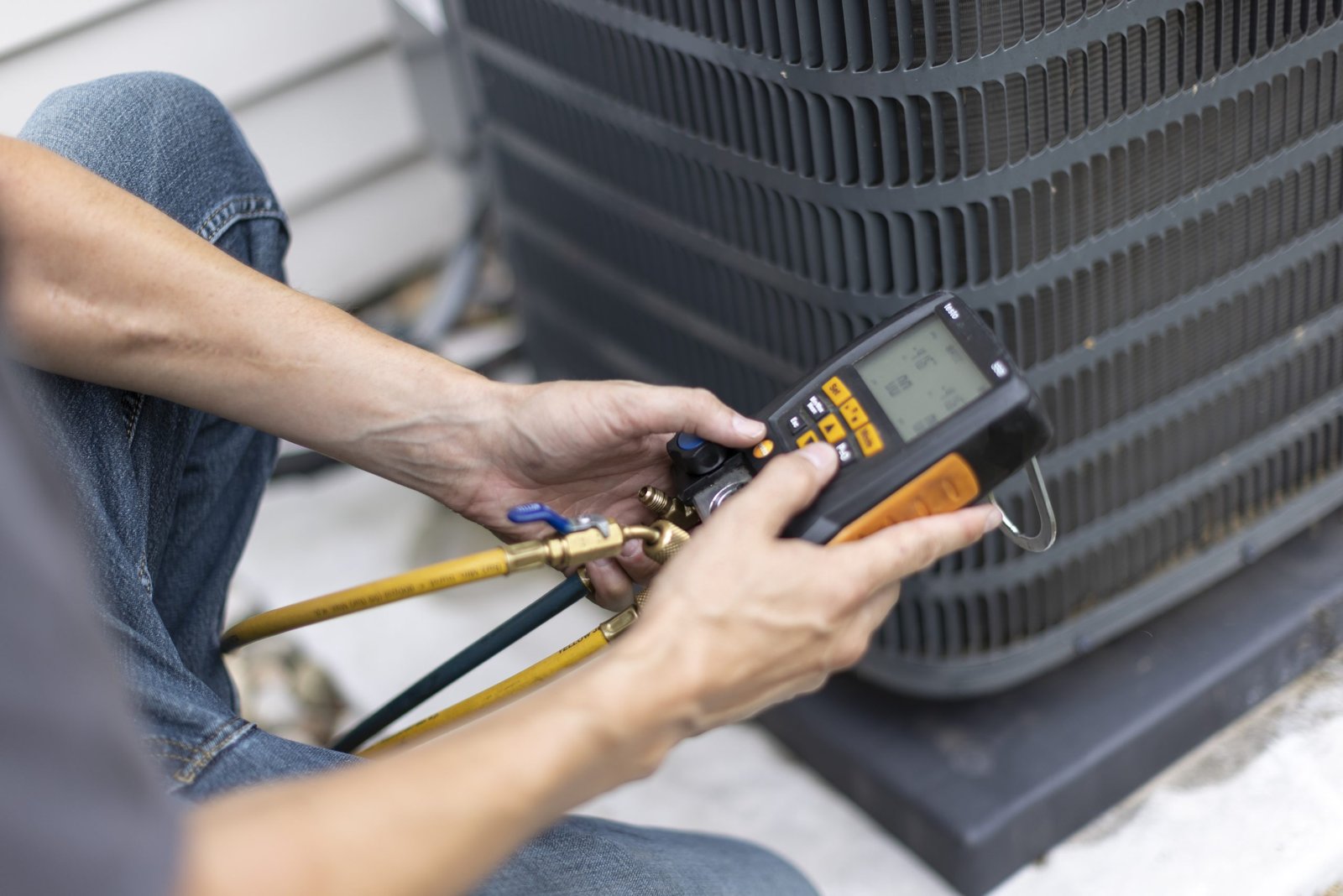
AC Gas Refill: Signs Your AC May Need Refrigerant
Reduced cooling and ice can signal low refrigerant—and often a leak. Learn refill warning signs, common lookalike faults and safer next steps to take.
When an air conditioner loses cooling power in Saudi Arabia, people often assume it needs a gas refill. Low refrigerant can cause weak cooling, but it is only one possibility among several. Dirty filters, dusty coils, fan problems, sensors and electrical faults can create similar symptoms. The safest approach is to recognize the clues, understand what refrigerant does and arrange a diagnosis before adding anything to the system.
AC Refrigerant Is Not a Consumable Fuel
Refrigerant circulates through a sealed circuit. It absorbs heat indoors and releases that heat outdoors; it is not burned or routinely used up. A correctly installed, leak-free system should not need seasonal topping up simply because summer has arrived. If the charge is low, there is usually a leak, a service history issue, or an installation and commissioning problem that needs investigation.
Adding refrigerant without addressing the reason for the loss may restore cooling temporarily, but it can allow the same problem to return. It may also leave the system incorrectly charged if the true fault was elsewhere. Proper AC gas refill work therefore begins with evidence, not an automatic cylinder connection.
Signs That Can Point to Low Refrigerant
Cooling has become gradually weaker
A system with a significant undercharge may run for long periods while the room remains warmer than expected. Supply air may feel only mildly cool. In intense Saudi heat, the difference becomes especially obvious in the afternoon because the AC has less spare capacity to overcome the building load.
Ice forms on the indoor coil or copper line
Low refrigerant pressure can make the evaporator coil too cold, allowing moisture to freeze on it. You may see frost on an accessible copper pipe or find ice after opening a split unit filter cover. Once the system stops, the ice melts and may produce unexpected water. However, restricted airflow can create the same freezing pattern, so ice alone does not confirm a refrigerant leak.
Hissing or oily traces appear near joints
A leak may create hissing at a damaged connection, although many leaks are too small or too remote to hear. Refrigeration oil can travel with escaping refrigerant and leave residue around flare joints, valves or coil damage. Do not bend pipes or tighten fittings yourself; document what you see for the technician.
Runtime rises and comfort falls
The compressor may continue operating because the thermostat is not satisfied. Longer runtime can increase electrical use and component stress without delivering comfort. This pattern deserves prompt diagnosis, particularly when filters are clean and airflow still feels normal.
- Weak cooling that persists after basic setting and filter checks
- Ice on the evaporator or refrigerant piping
- Repeated cooling loss after a previous refill
- Hissing or oily marks around refrigeration connections
- Long cycles with little room-temperature improvement
- A history of piping damage, relocation or poor installation
Other Faults That Mimic a Gas Shortage
Saudi dust makes airflow and heat-transfer problems particularly common. A clogged filter or dirty indoor coil reduces the amount of warm air crossing the evaporator. A condenser coated with fine dust struggles to reject heat into already-hot outdoor air. Either condition can make the AC feel undercharged even when the refrigerant amount is correct.
Fan problems also matter. A weak indoor blower delivers less air to the room, while a failed outdoor fan can cause poor cooling and high operating pressure. Faulty capacitors, control boards, temperature sensors and compressors may prevent normal performance. Duct leaks or closed dampers can make one room warm while the refrigeration circuit remains healthy.
- Dirty filter, evaporator coil or condenser coil
- Indoor or outdoor fan running slowly or intermittently
- Thermostat, sensor or remote-control setting errors
- Electrical starting problems and weak capacitors
- Compressor faults or protective shutdowns
- Incorrect system sizing, duct loss or installation defects
These overlaps explain why diagnosis matters. Start with AC not cooling guidance and safe filter checks, but avoid assuming that every warm room requires refrigerant.
Why Leaks Need Attention
A refrigerant leak is not only a comfort problem. Operating with the wrong charge can reduce cooling and place abnormal stress on the compressor. Escaping refrigerant should be handled by qualified technicians using appropriate recovery, testing and charging practices. Repeatedly topping up a known leak is not a durable repair.
Leak locations vary. Flare connections on split systems, service valves, vibration points, damaged copper lines and corroded coils can all be involved. Coastal humidity and salt-laden air may accelerate corrosion on exposed equipment in cities near the sea. In Riyadh, physical damage, installation quality, vibration and extreme thermal cycling may be more relevant. The climate clue helps inspection, but testing must confirm the location.
What a Technician Should Determine
A useful visit starts by checking whether the system is actually undercharged. The technician should consider indoor and outdoor temperatures, airflow, coil cleanliness, operating pressures and temperatures, system specifications and any evidence of leakage. Readings taken while airflow is restricted can be misleading, so basic conditions need to be corrected first.
If a leak is suspected, the next step is to locate it as accurately as practical. Methods vary with system type and fault size. After repair, the circuit may need pressure testing, evacuation and charging according to the equipment requirements. The goal is a clean, dry, correctly charged system, not simply a brief improvement at the vent.
What You Can Check Safely
Before requesting service, confirm cool mode and a sensible setpoint. Clean an accessible filter, make sure indoor airflow paths are open and inspect the outdoor unit from a safe distance for obvious blockage. Note whether the outdoor fan starts, whether the problem affects one unit or many, and whether ice forms. These details can make the service request clearer.
- Record when cooling became weak and whether it was sudden or gradual
- Photograph visible ice or oily residue without touching components
- Share any previous refill, repair or installation history
- Explain whether water leakage or unusual noise occurs too
- Turn the unit off if heavy ice develops and allow it to thaw safely
Do not open refrigerant valves, release gas, use an unverified refill kit or keep running a severely iced system. If thawing water threatens walls or electrical areas, follow the advice for AC leaking water.
If your AC is showing ice, weak cooling or signs of leakage, contact Namaa HVAC to request a diagnosis and provide the unit type, city and service history.
Frequently Asked Questions
Is refrigerant a regular consumable?
No. A healthy sealed system should not need frequent top-ups. Repeated refills usually indicate leakage or prior incomplete service.
What are common signs of low refrigerant?
Weak cooling, longer run times, ice on lines or the indoor coil, and hissing near joints can appear—but other faults mimic these signs, so testing matters.
Should I refill gas without finding a leak?
Blind refills often bring temporary cooling that fades again. Proper service looks for leak paths and addresses causes where practical.
Can dirty filters look like low gas?
Yes. Restricted airflow and dirty coils can produce weak cooling and ice. Filters and airflow should be checked before assuming refrigerant loss.
Is gas refill the same for every AC type?
Procedures and refrigerants differ by equipment. Technicians must use the correct refrigerant type and charging method for your system.
Need AC Service? Get in Touch Today
Tell us about your AC issue and we will get back to you promptly.
- Call +966 12 345 67890
- Email info@namaahvac.com
- Hours Saturday – Thursday: 8:00 AM – 10:00 PM | Friday: 2:00 PM – 10:00 PM
- Service Areas Riyadh, Jeddah, Dammam, Khobar, Mecca, Medina & major cities across KSA